
Opening hookYour voice · Take 2 of 2
Pick up an apple in any supermarket. It's redder, shinier and sweeter than the apples your grandparents ate, and it might be ten months old. Nobody lied to you. We just slowly designed food to be bought, not eaten. So when did food stop being food?
From idea to draft in four steps.
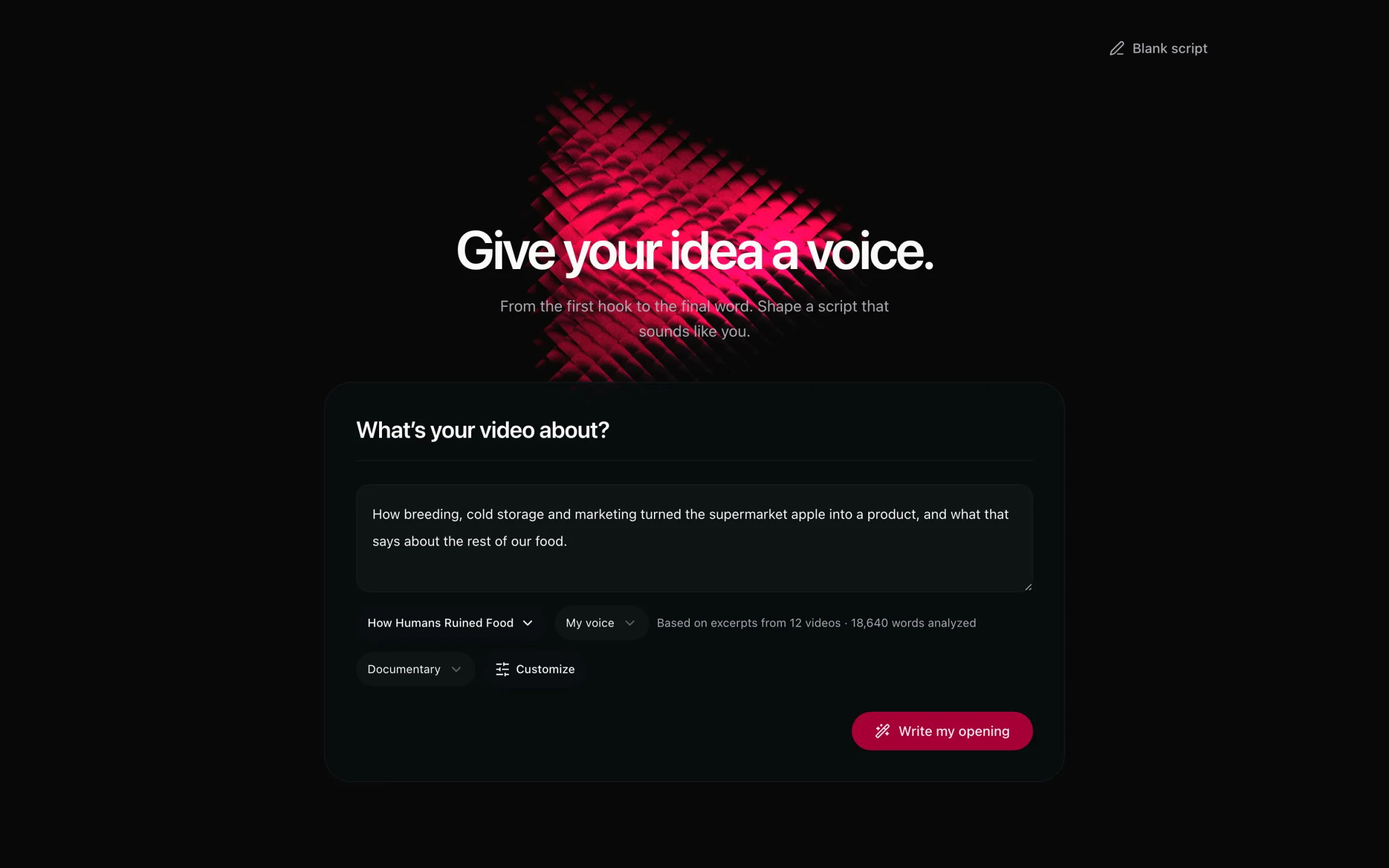
1. Context
Your idea, its sources and the way you talk.
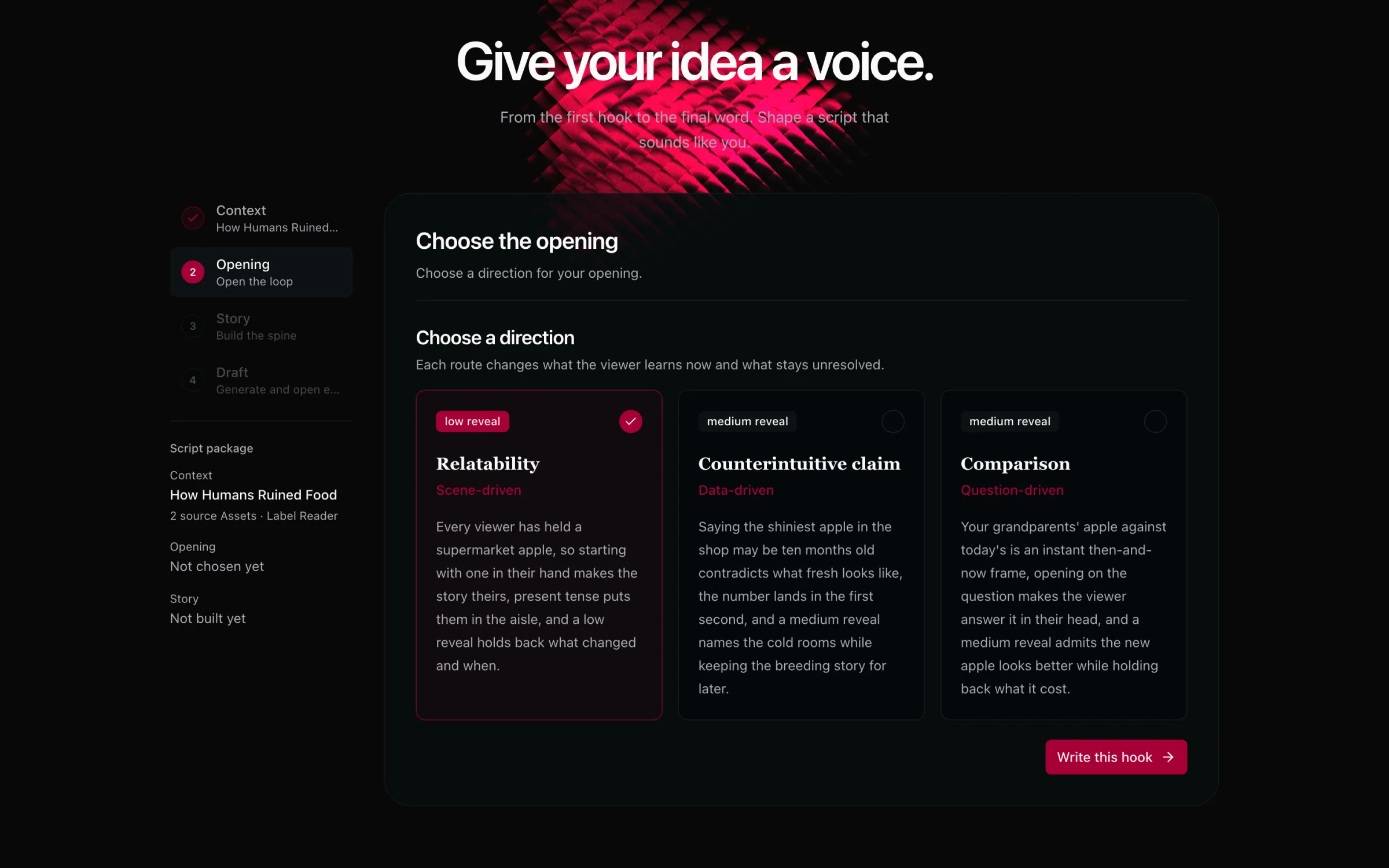
2. Opening
Pick how the hook opens the loop.
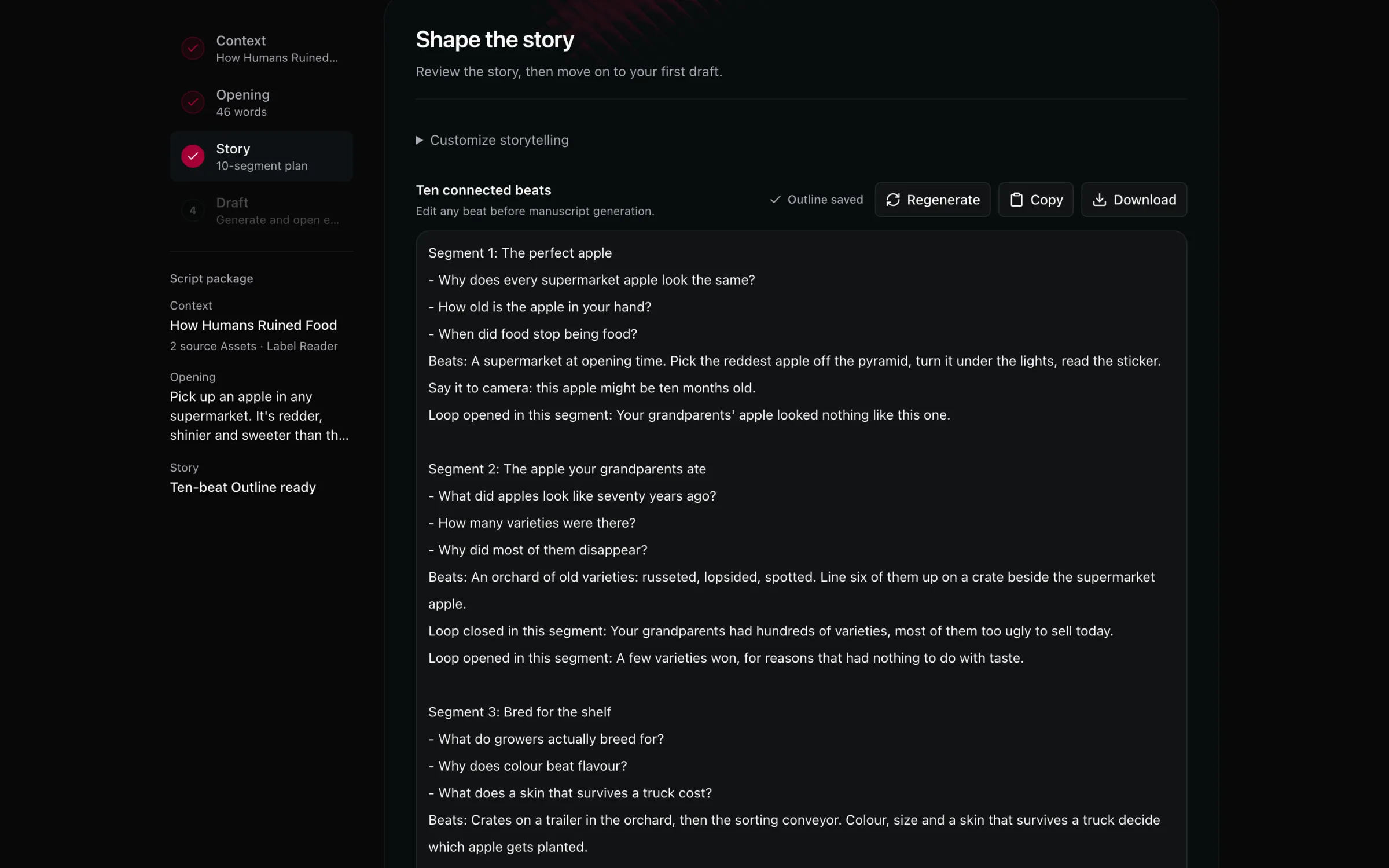
3. Story
Beats that open loops and close them.
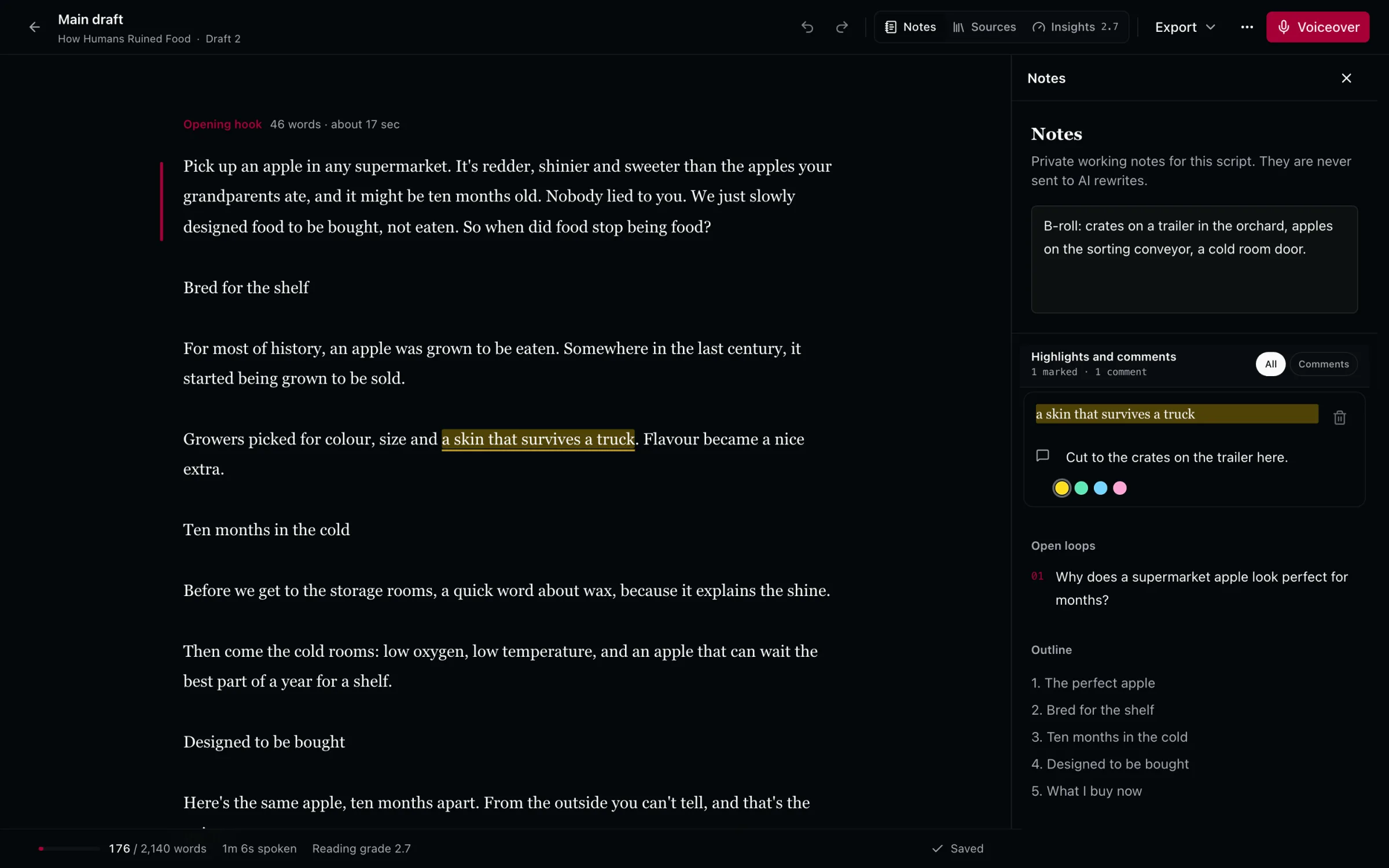
4. Draft
Every word you'll say, ready to narrate.
A writing room.Not a chat box.
Your voice, take by take.
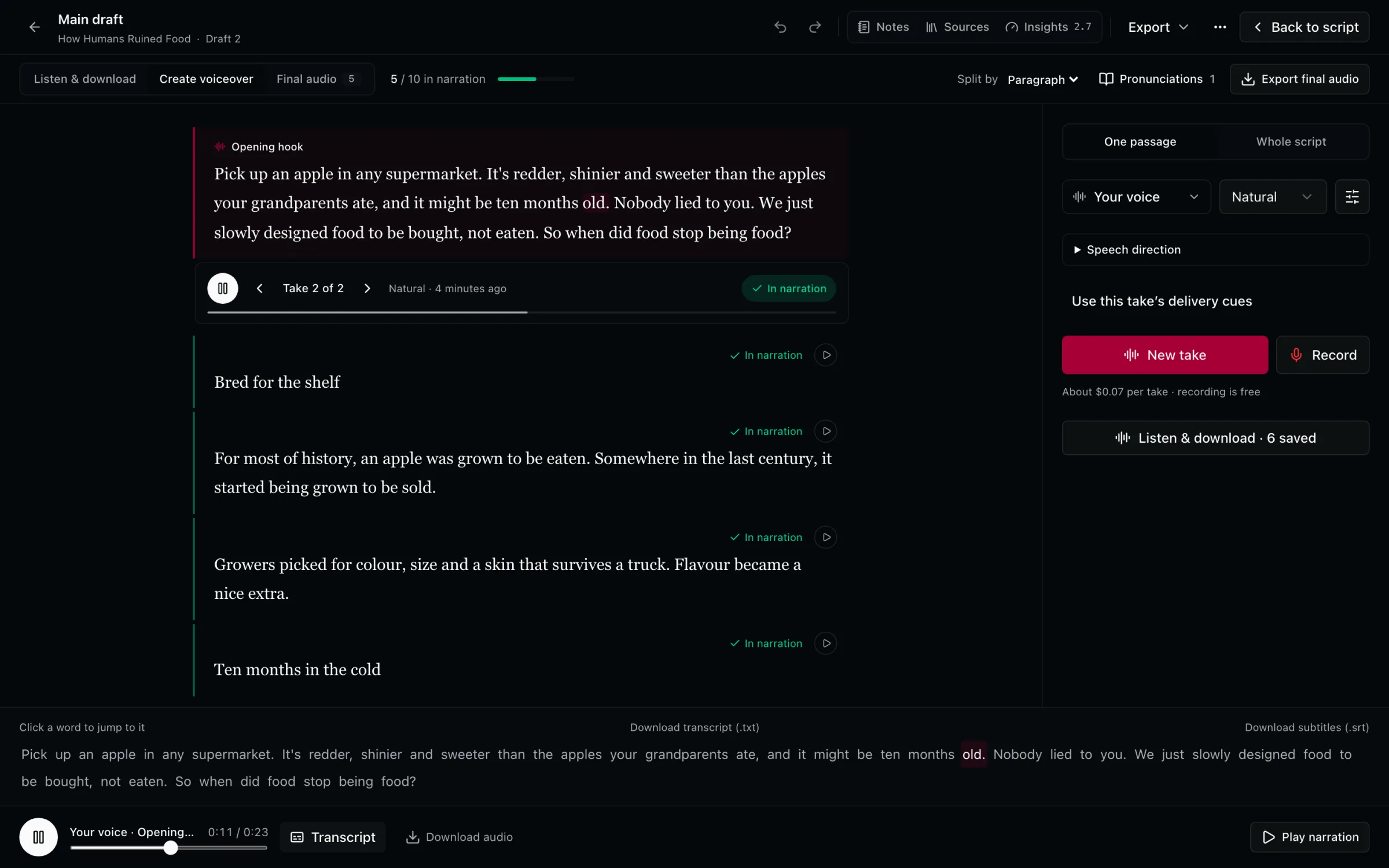
One passage at a time.
Each paragraph gets its own takes.
Know what's in.
Every paragraph shows whether it's in the narration.
Your voice or a stock one.
Generate a new take, or record it yourself.
Word by word.
Click a word to jump to it. Download the transcript or subtitles.
Everything around the words.
Your own voice. Cloned from a few clean recordings.
Pronunciations. Teach it names and places once.
Sources. Your research, next to the draft.
Speech direction. Pace and delivery cues, per passage or for the whole script.
Subtitles. Download the transcript or an .srt.
Straight into the edit. The narration's words become the timeline.
Or just ask.
Mittalmar in your AI clientWrite the hook and outline with Mittalmar's stages, then narrate the opening in my voice.
- Prepare local script writing
- Read project Script
- Generate narration
The hook and outline are in the Script, and a new take of the opening is in Voiceover. Listen before you keep it.
Clone my voice from the recordings I uploaded to this Project.
- Clone your voice
- List narration voices
Your voice is ready. It shows up as Your voice in Voiceover.